Offensive Attack Patterns and Approaches
Understanding systematic approaches to offensive play enables teams to develop coordinated attacking strategies that maximize scoring opportunities while maintaining tactical consistency.
Understanding Attack Formation Fundamentals
Attack patterns in volleyball represent organized sequences of player movements and ball contacts designed to create scoring opportunities. These formations establish predictable positioning that allows teams to execute coordinated plays with consistent execution. The fundamental structure of any offensive approach begins with understanding how positioning affects timing, spacing, and decision-making for both the setter and attacking players.
The basic attacking unit involves the setter's positioning, the approach paths of hitters, and the coordination between front-row and back-row players. Effective formations require that each player understands their role within the larger tactical framework. This foundational knowledge enables coaches to build increasingly complex strategies while maintaining clarity of purpose for team members.
Formation selection depends on several factors including opponent defensive alignment, available player skill levels, court positioning, and the specific phase of match play. Teams that maintain consistent formation principles throughout different match situations develop stronger pattern recognition and execution quality over time.
Key Principle
Consistent attack formations build team muscle memory, allowing players to execute complex plays under match pressure with greater reliability and reduced decision-making time.
Primary Attack Patterns and Their Applications
1
Middle Attack Pattern
The middle attack involves the center front player approaching quickly to hit from directly above the net. This pattern creates timing challenges for opposing blockers due to the speed of the approach and limited lateral movement options. Middle attacks work effectively in combination with outside attacks, as they occupy defensive resources and create spacing for other offensive plays.
2
Outside Attack Pattern
Outside hitters execute attacks from the left side of the court, typically hitting from deeper positions and with longer approach distances. This pattern allows for higher attack angles and provides flexibility in shot selection. Outside attackers often function as primary offensive weapons, requiring consistent quality setting and strong approach mechanics to maintain effectiveness throughout extended rallies.
3
Right Side Attack Pattern
Right side attacks operate from the opposite end of the court, often executed by opposite hitters or right-side specialists. This pattern becomes particularly valuable when the left side is heavily defended, providing alternative scoring pathways. Right side players frequently transition between offensive and defensive responsibilities, requiring versatile skill development in both disciplines.
4
Back Row Attack Pattern
Back row attacks involve players attacking from behind the three-meter line, expanding offensive options beyond front-row players. This pattern requires extended approach distances and specific footwork sequences to achieve proper timing. Back row attacks create dimensional complexity for opposing defenses, as they must cover additional court areas and adjust blocking strategies accordingly.
Each pattern serves specific strategic purposes and functions most effectively when integrated into a comprehensive offensive system. Teams that develop proficiency across multiple attack patterns gain significant tactical advantages through increased unpredictability and defensive adaptation challenges.
Approach Footwork and Hitting Mechanics
Effective Approach Sequences
The approach footwork preceding a hit represents a critical technical component affecting both timing and power generation. Standard approach patterns typically involve two or three steps that build momentum while positioning the player optimally for the hitting phase. The relationship between approach speed and timing becomes increasingly important as match intensity increases, as defenders adjust positioning more rapidly and setters vary delivery distances and heights.
- Two-Step Approach: Provides quick execution timing, useful for quick attacks and when defenders are positioned aggressively
- Three-Step Approach: Allows greater momentum development and power generation, preferred for outside and middle attacks
- Four-Step Approach: Maximizes momentum for maximum power attacks, often used in high-level competitive play
Hitting Mechanics Principles
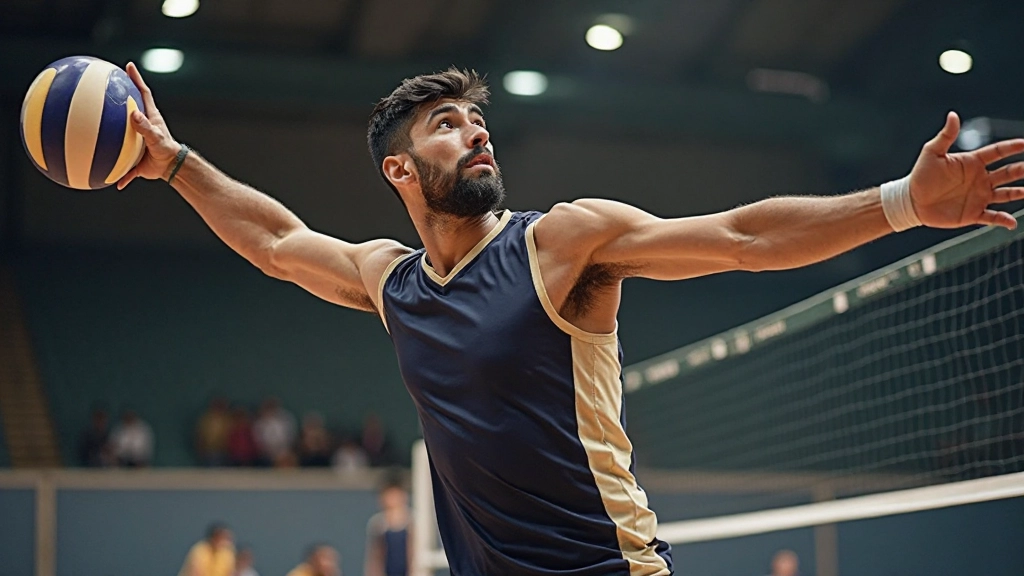
Proper hitting mechanics involve coordinated movements across multiple body segments working together to transfer energy efficiently from lower body through the striking arm. The sequence begins with lower body positioning and leg drive, continues through core rotation and trunk movement, and concludes with arm acceleration and hand contact precision. This kinetic chain approach ensures that maximum power reaches the ball while maintaining control and consistency.
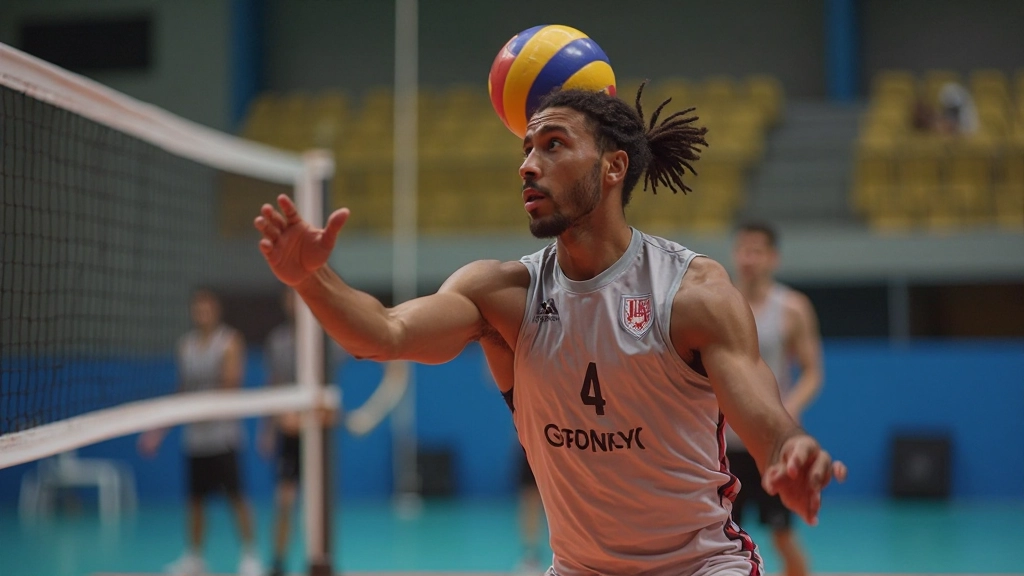
Contact point optimization directly influences shot effectiveness. Higher contact points create steeper attack angles and reduce opposing defensive response time. Maintaining consistent contact positioning across different ball heights and setter deliveries requires continuous technical refinement and pattern awareness. Advanced players develop the ability to adjust contact timing and arm angle in response to defensive positioning, creating increased offensive unpredictability.
Maximizing Offensive Efficiency
Offensive efficiency represents the percentage of attacks resulting in either direct kills or situations providing tactical advantage. Teams focusing on efficiency optimization typically emphasize quality over quantity, developing strategic approaches that minimize unforced errors while maintaining consistent scoring pressure. This philosophy becomes particularly important in match situations where extended rallies favor teams with superior decision-making and execution consistency.
A
Pattern Variation and Deception
Implementing subtle variations in approach timing, footwork patterns, and hitting approach creates defensive uncertainty. Opponents cannot predict attack location or timing when players execute multiple approaches from similar court positions. This deception principle applies across all attack patterns, allowing setters and attackers to execute pre-planned variations that catch defenses in suboptimal positioning.
B
Setter-Attacker Communication
Effective offensive systems require clear communication protocols between setters and attackers regarding available options, defensive positioning, and attack selection. Teams establishing robust communication systems execute more complex plays while reducing decision-making errors during high-pressure situations. Visual signals, verbal communication, and pre-match planning all contribute to coordinated offensive execution.
C
Positioning and Court Management
Strategic positioning of players throughout the court creates spacing advantages and limits defensive movement options. Teams that maintain disciplined positioning relative to the ball and each other execute attacks more effectively, as defenders face increased difficulty responding to multiple simultaneous threats. Court positioning strategy extends beyond attack execution to include transition phases and defensive repositioning between plays.
D
Continuous Technical Development
Maintaining consistent improvement in fundamental skills directly translates to offensive efficiency gains. Players who invest in continuous approach footwork refinement, hitting mechanics optimization, and decision-making development demonstrate measurable performance improvements. Training emphasis on situational repetition and match-realistic scenarios builds skills that transfer effectively to competitive environments.
Educational Information Notice
This content provides educational information about volleyball training concepts and offensive strategies. It is intended for informational purposes and does not constitute professional coaching advice or replace guidance from qualified volleyball instructors. Individual circumstances, player skill levels, and team dynamics vary significantly, and what works for one team may require adjustment for another.
Readers should consult with certified volleyball coaches and trainers when implementing new training methodologies or making decisions regarding competitive strategy. Proper progression from fundamentals through advanced techniques ensures both safety and optimal skill development. Training intensity, player readiness, and individual abilities should guide all implementation decisions.
Explore Related Topics