Setting and Positioning Fundamentals
Understanding the critical positioning principles and footwork patterns that enable setters to deliver consistent, accurate passes for effective attacks. Master the foundational techniques that form the backbone of successful team coordination and offensive strategy.
Understanding the Role of the Setter
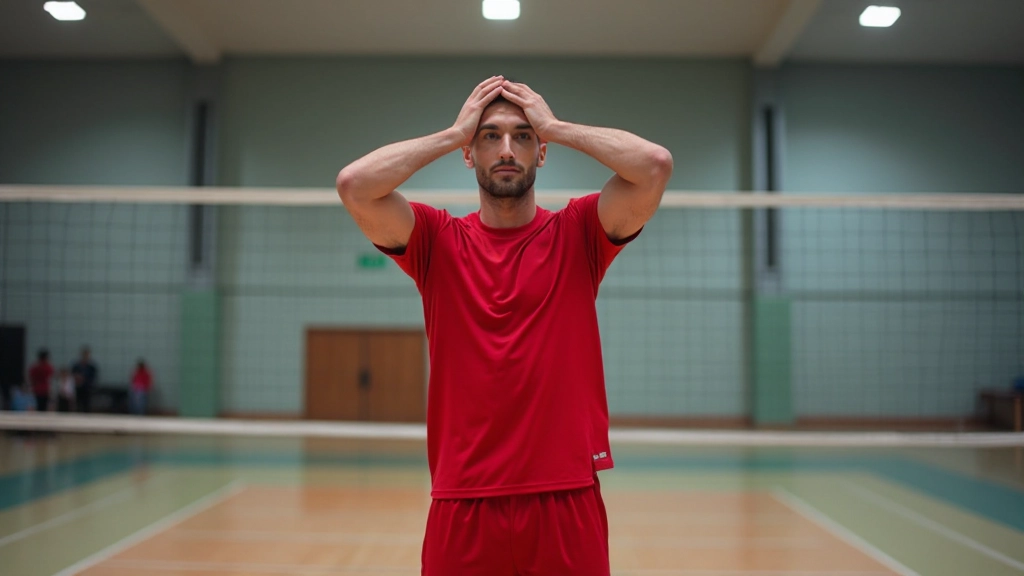
The setter occupies a unique position in volleyball, serving as the primary playmaker and director of the offense. This role requires mastery of precise positioning, timing, and technical execution. A setter's responsibility extends beyond simply delivering the ball to attackers—they must anticipate team movements, adjust to varying pass quality, and create optimal conditions for offensive success. The positioning fundamentals establish the framework for all setter development, regardless of competitive level.
Setting demands a comprehensive understanding of court geometry, teammate positioning, and defensive strategies. Setters must maintain constant awareness of where attackers are positioned while simultaneously processing information about opposing blockers and the ball's trajectory. This cognitive and physical coordination develops through systematic practice of fundamental positioning principles that form the foundation for advanced techniques.
Key Principle
Proper positioning enables consistent technical execution and allows setters to make rapid adjustments during dynamic game situations.
Court Positioning and Strategic Placement
Setter positioning on the court varies based on offensive system, team formation, and game phase. In traditional systems, setters position themselves to receive the first pass and quickly move to the net for distribution. Understanding the relationship between the attack line, net, and defensive formation shapes how setters navigate court space. Strategic positioning reduces movement distance, improves decision-making speed, and enhances overall offensive efficiency.
Primary Positioning Zones
Defensive Zone (Back Court)
Setters position themselves to intercept passes from defensive players and teammates. This zone requires awareness of ball trajectory and timing for the approach to the net. Proper positioning in the defensive zone minimizes movement distance and enables quicker transitions to net position.
Transition Zone (Mid-Court)
This area represents the movement pathway from receiving position to net position. Setters must maintain balance and readiness during this critical transition phase. Proper footwork patterns through the transition zone establish rhythm and timing for accurate setting technique.
Net Position (Front Court)
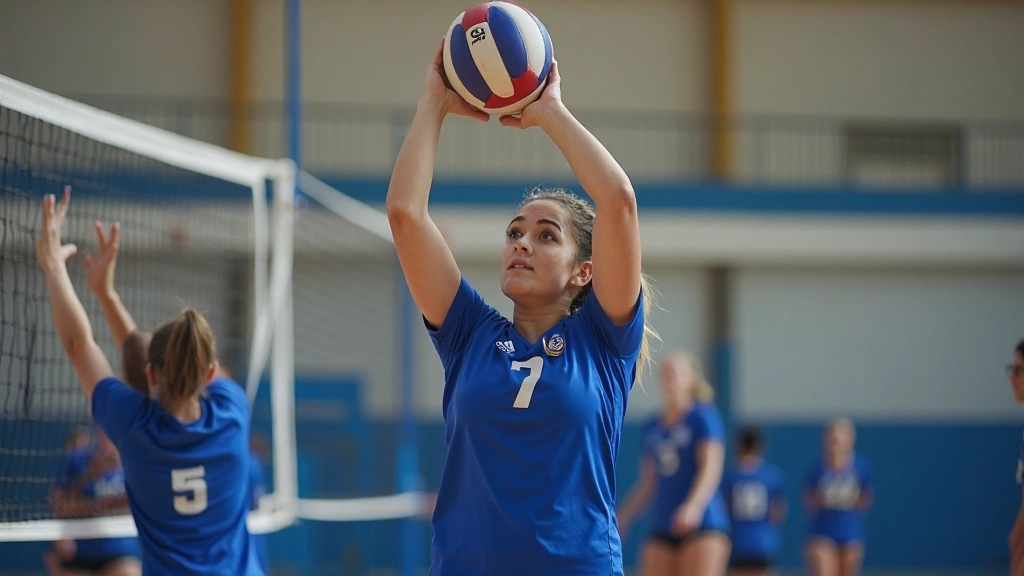
The area immediately behind and at the net where setters deliver passes to attackers. Positioning at the net requires precise distance management relative to the attack line and adjacent attackers. This positioning influences set height, distance, and trajectory.
Educational Information
This content provides educational information about volleyball positioning and setting techniques. It does not constitute professional coaching advice or instruction. Individual results and skill development vary based on factors including practice frequency, instruction quality, and athlete ability. Persons interested in developing volleyball skills should work with qualified coaching professionals who can provide personalized instruction appropriate to their specific situation and competitive level.
Footwork Patterns and Movement Efficiency
Footwork forms the foundation of all positioning fundamentals. Efficient footwork reduces unnecessary movement, improves balance, and enables rapid adjustments to changing game conditions. Setters develop specific footwork patterns designed to move from receiving position to setting position with minimal steps while maintaining body control. These patterns become automatic through systematic practice and repetition.
Essential Footwork Principles
Quick Adjustment Steps
Small, rapid steps enable setters to fine-tune positioning after receiving the pass. These adjustments occur during the final approach to the setting position and determine the quality of the platform.
Linear Movement
Setters move along direct pathways from receiving to setting position, minimizing wasted motion. This efficiency enables faster transitions and better court coverage.
Balance Maintenance
Proper weight distribution during movement ensures stable positioning for setting. Balance enables adjustments in all directions while maintaining technical precision.
Rhythm and Timing
Synchronized footwork with hand positioning creates consistent rhythm. This coordination allows setters to deliver predictable sets that attackers anticipate.
Footwork efficiency directly impacts setting accuracy and consistency. Setters who master fundamental footwork patterns can adjust to imperfect passes while maintaining technical quality. This adaptability proves essential when defending against various attacking strategies and responding to game-situation demands.
Hand Positioning and Setting Mechanics
Hand positioning represents the technical foundation of setting execution. Proper hand placement enables consistent ball contact, directional control, and trajectory management. Setters develop specific hand positions designed to accommodate passes from various court locations while maintaining contact quality and accuracy. The relationship between hand positioning and body alignment determines the quality of the final set.
Core Hand Positioning Elements
Hand Formation
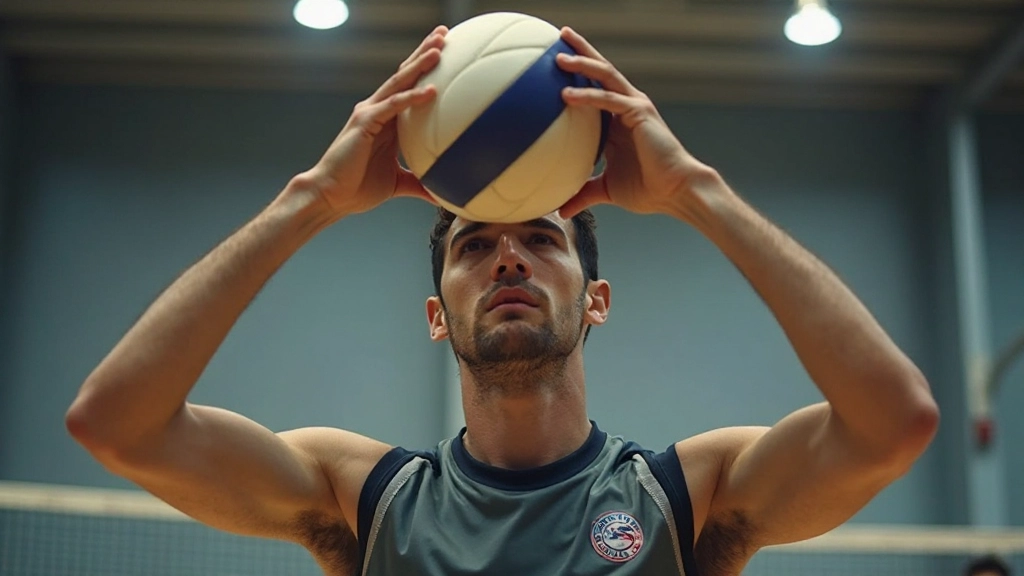
Hands position above and slightly in front of the forehead with fingers spread to create optimal ball contact area. This formation enables directional adjustment and spin control while maintaining contact consistency. The specific finger positioning develops through repetitive practice and technical refinement.
Elbow Position
Elbows maintain an angle approximately 90 degrees, creating a stable platform for hand positioning. Proper elbow alignment prevents energy loss during ball contact and enables power generation through leg extension. This positioning remains consistent across different set types and distances.
Shoulder Alignment
Shoulders orient perpendicular to the intended set direction, enabling optimal weight transfer and force application. Proper shoulder positioning supports hand movement patterns and facilitates rapid adjustments to changing ball trajectories.
Body Posture
Upright posture with slight forward lean enables power generation through the kinetic chain. Proper alignment from feet through hands creates a unified mechanical system that produces consistent, accurate sets across varying distances and heights.
Reading Game Conditions and Tactical Positioning
Effective setters continuously analyze court conditions and adjust positioning accordingly. This process involves observing teammate positions, opponent formations, ball trajectory, and game momentum. Setters who develop this situational awareness make more effective decisions about positioning, enabling optimal pass delivery regardless of the game context. This adaptability distinguishes experienced setters from those learning fundamental techniques.
Key Factors Influencing Positioning
- Attacking Formation: The position and readiness of front-row attackers determines optimal setting position and set timing. Setters adjust placement relative to attacker positioning.
- Defensive Positioning: Observing opponent blocking and defensive formation guides set selection and delivery strategy. This awareness enables more effective offensive execution.
- Pass Quality: The accuracy and speed of incoming passes requires immediate positioning adjustments. Setters develop positioning patterns for high, medium, and low passes.
- Game Tempo: The pace of play influences positioning decisions. Faster tempos require quicker transitions; slower tempos allow more deliberate movement patterns.
- Score Situation: Close competitive situations may require different positioning strategies compared to situations with significant score differences.
Mastering fundamental positioning creates the capacity for tactical adjustments. Setters with strong fundamentals possess the technical foundation to analyze game conditions and respond with appropriate positioning choices. This progression from fundamental mastery to tactical application represents the development pathway for all serious setters.
Developing Positioning Skills Through Systematic Practice
Positioning fundamentals develop through deliberate, structured practice that emphasizes repetition and progressive challenge. Effective practice sessions isolate specific positioning elements, allowing setters to build consistency before combining elements in complex game situations. This systematic approach accelerates skill development and builds the automatic responses essential for high-performance setting.
Effective Practice Strategies
Repetitive Movement Drills
Consistent repetition of footwork patterns and hand positioning creates neuromuscular memory. Dedicated drills focusing on specific movement patterns develop automaticity and reduce conscious thought requirements during competition.
Progressive Complexity
Practices begin with simplified conditions and progressively increase complexity. This graduated approach ensures fundamental mastery before introducing game-realistic demands and multiple simultaneous variables.
Video Analysis
Recording and reviewing positioning execution enables identification of technical errors and areas for improvement. Visual feedback accelerates the learning process and supports corrective modifications.
Coaching Feedback
Qualified coaching provides expert analysis of positioning mechanics and specific guidance for technical improvement. Consistent feedback ensures practice efforts focus on meaningful skill development.
Dedicated focus on positioning fundamentals during the skill-building phase creates a strong foundation for all advanced techniques. Setters who invest time in mastering these core elements develop greater consistency, adaptability, and performance reliability across varying competitive contexts.
Conclusion: Building Excellence Through Fundamental Mastery
Setting and positioning fundamentals form the essential foundation for successful volleyball performance. Setters who develop comprehensive understanding of court positioning, footwork patterns, hand positioning, and tactical awareness create the technical platform for consistent, accurate play. These fundamentals enable adaptation to varying game conditions and support the development of advanced techniques that characterize elite-level setting.
The journey to excellence in setting begins with deliberate mastery of positioning principles. Through systematic practice, quality coaching, and sustained commitment to fundamental development, setters build the skills necessary for meaningful team contribution and competitive success. Whether participating at recreational, collegiate, or professional levels, the positioning fundamentals discussed here remain essential elements of effective setting performance.
Key Takeaways
- Setter positioning varies across court zones, requiring different technical adjustments
- Efficient footwork patterns minimize movement distance and enable rapid positioning transitions
- Proper hand and body positioning create the technical foundation for consistent setting
- Game awareness and tactical positioning develop through experience and observation
- Systematic practice and progressive skill-building accelerate fundamental mastery
Related Articles

Mastering Fundamental Serving Techniques
Explore essential serving mechanics and progressions that build consistency and accuracy across various service approaches and competitive situations.

Building Effective Team Coordination
Learn proven methods for developing communication patterns and tactical synchronization that enhance team performance and competitive effectiveness.
Defensive Strategies and Dig Techniques
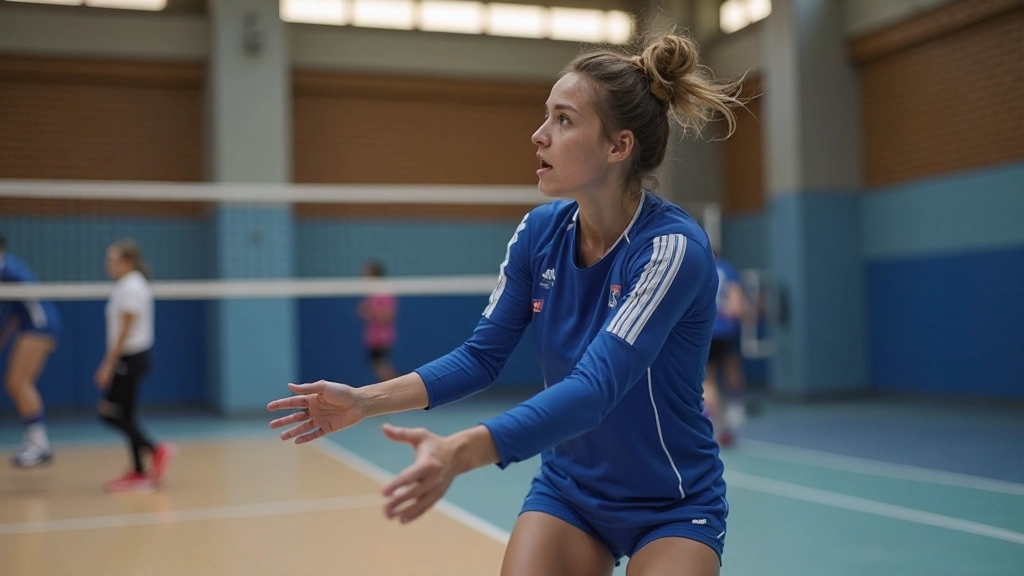
Develop comprehensive defensive systems focusing on positioning, communication, and technical execution for effective opponent containment.